Thursday, March 8, 2012

#6 GONE WITH THE WIND (1939)


Plot summary (with spoilers): We are in Tara, Georgia, in 1861, on a cotton plantation just before the beginning of the Civil War. I would literally feel more at home on Mars.
On the O'Hara farm, Miss Scarlett sips her mint julep and wards off the advances of indistinguishable gentlemen callers while hoping to catch the eye of the dashing Mr. Ashley Wilkes. One of the gentleman callers informs Scarlett that Ashley Wilkes is to be married to his cousin (natch), a Miss Melanie Hamilton.
(This was my grandmother's Very Favorite Movie, so much so that she named my mother after Melanie Hamilton. As luck would have it, they have nearly the exact same personalities, and even kind of look alike).
"Fiddle dee dee!" cries Scarlett, despite the fact that she presumably wants to be taken seriously as a human being.
She informs her gentlemen callers that the O'Haras are going to have a Big Cotillion Party Whatever Thing that very night, and she pretends Ashley's engagement doesn't bother her. Her loyal slave, Mammy, calls her bluff. She knows Miss Scarlett is'a gonna be trying to steal ol' Mister Ashley away, and Mammy don't approve! (You'll be shocked to learn that Mammy is both sassy and overweight).
"Yabba Dabba Do!" says Scarlett. "I shall make Ashley mine!"
At the Big Cotillion Party Whatever Thing, the men all dote on Scarlett and feed her grapes and dance for her amusement and sword fight and mud wrestle and leap into volcanoes and such, as men do. But Scarlett just ignores them and stares jealously at Ashley and Melanie as they accept congratulations from the assembled coterie.
"Bibbity Bobbity Boo!" says Scarlett. "My plan isn't working!"
But then she sees a new arrival: handsome, porn 'stached Rhett Butler. She learns from a gentleman caller that Rhett Butler was kicked out of West Point and disowned by his family.
Later, Scarlett steals away a moment in private with Ashley and confesses her love for him. He admits he loves her too, but says he must marry Melanie, because something something Family Duty something.
Scarlett screams and hauls off and slaps him and he leaves the room.
It's then that Rhett pops up in view from behind the couch. He starts laughing as Scarlett rages at him and storms out. Ah, so it's a Moonlighing/Cheers scenario, huh? And we're going to take four hours until these crazy kids get together? Wake me when it's over.
Suddenly, word breaks out that the war has begun. The men all start leaving the Big Cotillion Party Whatever Thing to go off and enlist. Melanie's brother Charles, one of Scarlett's gentlemen callers from earlier, tells her he loves her and wants to marry her. Scarlett full on doesn't even look at him, she just stares at Ashley and Melanie kissing each other goodbye. Then she accepts Charles' proposal, and they marry before he goes off to war.
Cut to--Scarlett receiving a letter from the Confederate Army saying that Charles has died of pneumonia.
She goes into mourning, meaning she literally has to wear all black and a veil for an unspecified amount of time, and then she goes to Atlanta with Mammy and Melanie to cheer up. Mammy tells it like it is and calls her on her falsities, and Mammy noes dat Miss Scarlett ain't upset about Mister Charles, and she's still in love with Mister Ashley!
At a Charity Auction Dance for the war, Mr. Rhett Butler appears and "purchases" Miss Scarlett for the evening. Some weirdo Aunt O'Hara with little girl curls and ribbons in her hair even though she's like, sixty, thinks the idea of "buying" women for the evening is unseemly and she gets the vapors. Mammy is unavailable for comment.
Rhett Butler tells Scarlett he'll one day make her his, and she scoffs at this and tra-la-las and reminds him that she is still very much in love with Ashley. She asks him why he hasn't joined the Confederate Army, and he responds quite matter-of-factly that he's a scoundrel and will only fight in wars if he's getting paid a lot of money.
Then we jump forward in time a bit. The war is getting worse. Some general guy named Sherman is cutting a huge swath down through the South and our noble boys in gray don't seem to be able to stop him. Melanie and Scarlett anxiously wait in town with the rest of the womenfolk and old men and boys, and then messengers show up with copies of the names of the soldiers who've died. They're both really tense and for once Scarlett drops the Southern Belle shit and looks really scared. But Ashley's name is nowhere to be found.  Scarlett has the decency to pretend she's relieved for Melanie's sake, rather than her own.
That Christmas, Ashley's granted a three day leave. He has Christmas dinner with Melanie and the O'Hara's in Georgia. Again, Scarlett makes a pathetic play for him. He kisses her, then tells her he can't be with her and then makes her promise she'll watch over Melanie. Fiddle dee fucking dee.
Time passes. The war gets worse, and Atlanta is being evacuated. Scarlett's been drafted as a nurse, trying to care for wounded. Oh, and Melanie's back at the house, nine months preggers. A doctor asks Scarlett to help hold a man down as they cut off his gangrenous leg without anesthesia, and she freaks and bolts. Outside, the townsfolk are in pure panic mode, screaming and running around aimlessly, while the occasional canon goes off and blows something up. Yikes.
Rhett comes riding up on a worse and buggy, and swoops Scarlett into his arms. He drives her back to the house in Atlanta, where the O'Haras are packing up their shit, ready to head back to the farm in Tara. Scarlett's dad tells Scarlett that Melanie is too pregnant to make the trip and begs Scarlett to stay with her. Scarlett does not pout and stomp around and act like her bitchy self for once, and instead remembers her promise and agrees to stay. Another slave, Prissy, stays as well. Prissy has the most squeaky and annoying voice in all of cinema.
So while Sherman's Army advances, Scarlett helps Melanie give birth, then she and Prissy beg Rhett to provide them safe passage out of Atlanta. Rhett, Scarlett, Prissy, Melanie, and the baby boy race out of town as it burns down around them. It's fucking gorgeous, all of it.
Then Rhett says he must go. He tells Scarlett he's going to join the army, after all. He's ashamed of his cowardice and will fight to the death if he must. He tells Scarlett they're both equally selfish, but he's going to do something about it, dammit. Scarlett begs him not to go, to stay and help them reach Tara. He kisses her goodbye and then just up and leaves them. Scarlett drives the buggy the rest of the way home, until the horse literally drops dead from hunger and then they walk the rest of the way to the O'Hara estate. When they reach it, Mammy tells Scarlett that her mother died of scurvy or maybe the consumption or something, and that Daddy has gone crazy, and her sisters are distraught and all the slaves ran away except for her and Polk, and that the crops are gone and the house is in shambles and there's no food and life sucks and Scarlett goes outside and against the violent striking blood-red sky vows to never be hungry again!
(Even though she is currently hungry and will likely be quite hungry for the foreseeable future. But after that! No more hunger!).

Intermission. Time for coffee and a long walk. Go ahead, I'll wait.

We come back to find Mammy, Scarlett, and Scarlett's sister Suellen plowing the fields and picking crops and such. Suellen bitches about how her hands are calloused and ruined but gets no sympathy from the others. Melanie's still sick from the birth and their harrowing journey from Atlanta, and she tries to get up and contribute but Scarlett angrily tells her to just lie down. a lone Union solider happens upon the plantation and confronts Scarlett on the stairway. He gets a rapey glint in his eye and advances on her and she blammo shoots him dead. She and Melanie hide the body and steal his gold, about 150 dollars worth. They're able to  feed themselves for the time being. Eventually the war ends and Ashley Wilkes returns. Scarlett immediately throws herself at him again and they kiss again and he says he can't leave her for Melanie again.
"Nanu, nanu!" cries Scarlett!  "It's so unfair!"
Then the Reconstructionists come and demand heavy taxes from the poor beleaguered Southerners and Scarlett can't pay it. She learns Rhett is in jail for some reason I missed, and she fashions a dress made from the curtains just like Carol Burnett did, and visits him to try to squeeze some money out of him. He sees that her hands are all calloused which means that she's been working like some common woman. He laughs in her face and says he has no money to give her anyway, all his foreign assets have been frozen. She leaves in a huff.
On their way back from town, they walk past Union businessmen telling former slaves they'll soon be getting 40 acres and a mule (40 acres?!  Lawdy, lawdy!) and they hope this act of kindness will be remembered in the voting booth, and then they walk past two rich Northerners in a buggy, one white and one black, who haughtily yell at the poor, dirty Confederate soldiers in their way.  I don't really know how to unpack those scenes.
Then Scarlett learns of a white Southern business man in town named Frank who runs a lumber mill and is trying to woo her sister Suellen. Scarlett intercepts him and tells him that Suellen's already married and basically strongarms him into marrying her. She helps him run the mill and enlists Ashley's help as well and they use former white convicts as their low-paid work force. Ashley openly frets about exploiting other people unfairly and Scarlett gives the only line in the whole movie that's vaguely critical of slavery when she points out the South had been exploiting people for quite some time now. Ashley responds that that's different because he treated his slaves nicely and was going to let them free eventually, anyway. Scarlett has no response because he obviously made an excellent point with no conceivable counter-argument.
Then one day Scarlett's riding through the woods after going home from the lumber mill and some Union jerks attack her and try to eat her or turn her into a pumpkin or something and she rides away screaming. Ashley, Frank, and some others from a posse to get revenge and Frank ends up getting killed.
By this time, Rhett's out of jail and rich again, and when the cops come to arrest Ashley, Rhett covers for them by saying they were all visiting a prostitute.
So Scarlett's in mourning a second time and Rhett proposes. Scarlett protests, and Rhett says he can't sit around waiting for the next time she'll be between husbands. Heh.  Good one, Rhett!
He says he has a ton of money, which she loves, and she warns him upfront that she still loves Ashley and will never love him. He says he knows he can change her mind and they kiss and get married.
Life goes on. There's some cute scenes where Mammy don't approve of  Mr. Butler and then eventually he wins her over. Scarlett buys a huge mansion, the lumber mill is thriving, etc. Finally, Scarlett gets pregnant and gives birth to a baby girl they name Bonnie Blue Butler. It seems even back then the rich celebrities were giving their children ridiculous names. When Scarlett discovers she's permanently gained weight due to childbirth she tells Rhett she doesn't want to have any more children. And to that end...they'll be sleeping in different rooms from now on. Rhett's furious and drinks and throws things.
Late at night at the lumber mill, Scarlett and Ashley wax nostalgic about the good ol' days in Dixie, and then they briefly embrace. This is witnessed by Scarlett's sister, who gleefully tells everyone in town.
Rhett learns of this and drunkenly insists Scarlett go to the Big Party Cotillion Whatever Thing that Melanie is having that very night. Scarlett says she won't go, she'll be ruined if she does!
Rhett grabs her and rips her out of bed and screams at her that she'll definitely be going.
"Schemeel, schmazel, hafenseffer incorporated!" cries Scarlett. "I shan't be humiliated!"
But she goes anyway, and because Melanie is a saint, she greets Scarlett warmly and says she doesn't believe the rumors.
That night Rhett's furious to learn Scarlett wasn't humiliated, and he drunkenly threatens to kill her and even puts his hands on her head and threatens to squeeze until her skull breaks and then drags her upstairs and presumably rapes her. The next morning she's all lovey dovey, because she was treated how women secretly want to be treated of course, but Rhett says he's leaving her and taking Bonnie Blue to London to live. After a brief stint in London, he comes back because Bonnie Blue missed her Mommy. They sit outside on the porch and discuss whether or not to reconcile and then Bonnie Blue comes riding up on her little pony and says "look Mommy, look Daddy! I can jump!" and rides off and they tell her to be careful.
Aw shit, this movie's gonna kill the kid, isn't it?  Goddamit so much.
Sure enough, Bonnie Blue is thrown from her horse and breaks her neck.
And then after the funeral, Melanie falls ill from scabies or yellow fever or something, and on her deathbed, she wants to see Scarlett. Scarlett's terrified that Melanie will call her out for wanting her husband all these years, but Melanie just thanks her for saving her life all those years ago, and then she dies.
Scarlett goes back home to find Rhett packing his shit, saying he's gone for good. Inexplicably, Scarlett begs him to stay, to start over, but he won't. She doesn't know what she'll do or how she'll survive without him. But does he give a damn? Frankly, no. He does not.
And all these years I thought that's how the movie ended, with Rhett walking off into the fog.
But no, there's another minute or so of Scarlett weeping on the stairs and then creepily sitting up and swearing that she'll win Rhett back, somehow, some way. After all, tomorrow is another day.

Review: Way, way better than I thought it was gonna be. In fact, I'm completely stunned by how much the writing was and how epic in scope and story it was. It was basically and extremely well-crafted four hour soap opera, and granted, YMMV on whether or not that's an appealing description, but it worked for me. I particularly liked how nuanced and complicated both Scarlett and Rhett were. They both did evil and good, were both caring and selfish, and both likable and admirable and then at times quite hate-able. You know, they were...what's the word? Oh yeah, recognizable human beings, something the movies aren't always concerned with creating.
The views on race relations were probably quite progressive in 1939. Granted the movie was only lightly anti-slavery, and of course we consider it odd that Mammy stayed with Scarlett of her own free will, but there's no way you can watch this movie and say her character was disrespected or looked down upon by the others. It's as good as you can expect, from 1939, to be sure. Especially compared to many of the other Olden Times movies I've seen this year.
Vivien Leigh and Clark Gable were great, too. Lots of chemistry and nuance to their performances, and I liked the way both characters were deceptively shallow and one-note in the first act, and then slowly we got to know them and their motivations better. I was completley wrong when I early on pegged their relationship to be an endless will they/won't they true love scenario. Instead, they were never really in love and a train wreck whenever they were around each other. So unexpected, but awesome.
Complaints, I have a few. But only a few. Still a bit too long, especially in the last act, there was the weird and totally unnecessary detour to London, and maybe a bit too much melodrama overall. Did Melanie have to die, especially within five minutes of Bonnie Blue?
But I mostly loved it. I would go so far as to say that this is by far and away the most sophisticated Olden Times movie I've ever seen, both in story and character development. I hadn't thought that movies were capable of this level of sophistication until at least the 60's.

Stars: Four out of five.

Next, "Singin' in the Rain".


Wednesday, February 29, 2012

#7 LAWRENCE OF ARABIA (1962)


Throughout the centuries, white men have often taken the time to show minorities how to improve their lives, and it's about time Hollywood acknowledged this, dammit.

Plot summary (with spoilers): A man is riding his motorcycle through the winding English streets. Motorcycles are dangerous and scary, is what I say. The man crashes and dies. See? Told ya.
The man was T.E. Lawrence, and now we learn about his earlier life. Lawrence was a lieutenant in the British Army during WWI. He's sassy and insubordinate and a bit of a masochist. He puts out matches with his thumb and forefinger, slowly. His fellow soldiers want to know what the "trick" is. The trick, says Lawrence, is to not mind the pain.
The officers basically think Lawrence is kind of a douche, and they're kinda right, so they send him to...oh let's say Arabia, to assess what the Iranian Prince Faisal is thinking, and to gauge what the Arab involvement in the war effort against the Turks might be.
So Lawrence makes like a camel and humps outta there. He and a guide travel across the vast desert, headed for Prince Faisal. We get our first of many gorgeous shots of the desert landscape, in all its 70mm lusciousness.
They stop for water at a well, and another dude comes riding up on a camel and shoots Lawrence's guide. He demands Lawrence say what he's doing here, and Lawrence is all haughty and angry, despite the fact that the guy is waving a gun in his face. The dude is impressed by Lawrence's moxie, and lets him live.
By the time Lawrence arrives at Faisal's camp, his superior officer, Brighton, tells him to keep quiet and let him to do all the talking. But Lawrence don't play like that. He immediately pipes up and starts in on offering Faisal and the Arab people military advice. Brighton's pissed, but Faisal's intrigued. Lawrence's plan is to attack the Turk stronghold of Aqaba, a city by the ocean. In Aqaba, they have guns pointing outward to defend themselves in case of an attack by boats, but they don't defend themselves in case of a land attack, because a vast desert must be crossed in order to reach it by land. The desert is considered uncrossable.
But guess who wants to cross it? Oh yeah.
Lawrence convinces Faisal to give him a hundred men to cross the desert and attack Aqaba. It's time for some more sweeping, epic landscape! The leader of the men is Sherif Ali, who immediately doesn't trust old blue-eyed Lawrence, but obeys Faisal's orders, anyway. Other Arabs of note: two teenage boys, Daud and Farraj, whom Lawrence hires as servants.
So they cross the desert, riding their camels and sipping their water judiciously, leaving me time to ponder how evolution works and how neat it is that the camel is basically a horse that can survive long periods of time without drinking water and I wonder if I'm allergic to camels like I am to horses, and if I'm not and I lived in the Middle East, would I frequently ride camels, but really who cares, because how shitty it would be to live in a desert and boy I would never get used to all those robes and headgear and things.
Then they get to the last well and Sherif Ali informs Lawrence that the camels will last 20 days without water, and it will take about that long to cross this stretch of the desert. He suggests they travel at night. So they go and go and go and somehow its suspenseful and oddly calming at the same time, and not really boring. On the final night, Sherif Ali estimates they'll reach the next well by midday. Everyone's thrilled, until they see a riderless camel walking alongside them. They realize someone fell off their camel in the middle of the night. Lawrence wants to go back for the guy, but Sherif Ali says he's dead, it's Allah's will, they can't afford to go back.
Lawrence goes back. I get a little irritated at his appalling lack of judgement, which is how I know the movie's got its hooks in me. Ali continues onward with the rest of the men, save for Lawrence's loyal servants, Daud and Farraj, who wait for him.
Cut to the lonely camel-less Arab staggering along the sand, shedding clothes and looking about to pass out. Lawrence arrives in the nick of time. He rides all they way back to the well, where Ali is waiting nervously. When Ali sees him, he's thrilled and is totally won over. He gives Lawrence the robes and headdress to wear instead of his British army uniform. As they all drink from the well, another tribe shows up. They're the Howeitat tribe, led by Auda abu Tayi. (Pronounced just like it's spelled). Tayi's tribe hates Ali's tribe and they glower at one another. Lawrence is all, hey, let's hate the Turks instead. Won't you join us in attacking them? Tayi says he doesn't mind the Turks and that they give him 100 (Turk word for dollars) every month. Lawrence is all, oh snap, you're just the Turks' bitch, then! And Tayi's like, fuck you, and Lawrence is like, bitches take money, bitch, and Tayi's like, oh yeah?!, and Lawrence says once we take over Aqaba, you can steal all their fucking money, and Tayi's like, good point.
So the Howeitats join up with Ali's tribe. But then that night, someone from Ali's tribe kills a Howeitat, on account of their ancient Montague/Capulet blood feud, and Tayi demands the man be executed. Ali says no way will a Howeitat kill one of his men. So Lawrence says he'll do it. That way, the score will be even. They present the man to Lawrence, and it turns out it was the man who fell off his camel earlier. Lawrence says, "it's like raaaaaaain on your wedding day/it's like killing an Arab, that you already saved" and shoots him dead.
Then they reach Aqaba.
The attack is bloody and brutal, but they win the day. Except there's no gold to be found, and Tayi's pissed. But Lawrence says he'll ride back to the Brits in Cairo and tell them what happened, and that the Brits will be thrilled and they'll give Ali and Tayi lots of money and arms for taking over Aqaba. He takes his servants with him, and halfway back to Cairo, Daud falls into some quicksand is quickly buried. Lawrence and Farraj continue onward, but Lawrence is all extra-tormented now.
They reach Cairo and Lawrence tells them what he accomplished. The Brits agree to provide the Arabs with extra support and weapons, but then privately when Lawrence is out of the room, they say there's no way they're giving those dirty Arabs and weapons.
Then there's an Intermission. Phew.
When we return, we meet crusty old American reporter Jackson Bentley, who learns about Lawrence leading the Arabs against the Turks and makes him famous. There's lots more battles and fighting and such, and eventually Tayi and his men abandon the cause once they've made enough money. Ali and Lawrence watch him go with disgust, but press onward. Farraj gets injured during an attack and Lawrence is forced to kill him to keep him from being captured and tortured by the Turks.
He gets more and more angry and arrogant and quite unlikable to nearly everyone, including me. Jackson keeps publishing articles like make him more and more famous. They encounter the Turk city Daraa, and Lawrence wants to scout it out and spy on them and see how many Turks are there. Unfortunately, he's immediately caught. The Turk head bad guy, Bey, strips Lawrence of his robes, then full on grabs his nipple. Lawrence headbutts him, but then the guards grab him and hold him down. Then the cameras discreetly point elsewhere for a little while. Turks are super evil, you guys.
After the Turks are done with him, they throw Lawrence out of town. He's beaten down and humiliated and goes back to Cairo in shame. The Brits beg him to lead a final revolt onto the Turk stronghold of Damascus, and Ali says he's got his back. Lawrence goes back into battle, recruiting all kinds of Arab thugs who agree to attack the Turks for money and not for pride like Ali's men. They raid Damascus and brutally slaughter everyone there, Lawrence gleefully taking part. But once they've taken over, there's chaos as none of the separate tribes can agree on how to lead the city. Eventually, most everybody loots the place and leaves, leaving only Ali and Lawrence and the Brits. The Brits promote Lawrence to Colonel, and tell him to scram, they've got it covered now. Lawrence and his Arab tribesmen are no longer needed or useful. Lawrence is driven away from Damascus, as broken as he was before he got there.
Bummer.

Review: Pretty good. There are some truly beautiful, panoramic shots in this thing, an epic landscape to fit the epic story. The music was pretty great too, and the story hung together well. I was alternately intrigued by Peter O'Toole's performance and sometimes but off by it. He goes to extreme melodrama often, and it's very hard to pull that off. I didn't find him to be downright terrible or anything, but he certainly wasn't subtle. It was more showy than it needed to be, definitely. Somewhere between Dog Day Afternoon and Scent of a Woman on the Pacino Ham Scale. Everyone else was quite good, especially Alec Guinness, who played the Prince. It's always dicey when white actors play minorities and immediately smacks of racism, but this was 1962 and you can hardly apply today's standards to racial sensitivity. The good news is Guinness is not a caricature at all, and plays the part with dignity. Omar Sharif as Ali was also very good, and I loved the relationship he and O'Toole developed. My snarky comment up top about white people helping minorities is true to a degree, but nearly all the Arab characters were fully realized and three dimensional and not just cyphers to tell Lawrence's story. I particularly liked the dark and unsentimental ending.
But--it's almost four hours. There's just no reason for a movie to be four hours long. Even a well told story like this one is going to have bloat if it's four freaking hours. There were definitely times when my mind started to wander, and I wish that the movie had been cut be about half and hour or so. That would've been perfect.

Stars: Four out of five.

Next, the longest movie on the list (two minutes longer than this one, sigh), "Gone With the Wind".  Silver lining: If I hate it, I get to make jokes about not giving a damn. Expect at least half a dozen.

Friday, February 24, 2012

#8 SCHINDLER'S LIST (1993)


Plot summary (with spoilers): In Poland, in the beginning of it all, you wore that Swastika proudly on your arm. You went to all the great parties, saw all the best cabarets, eat the best meals, bedded down with the best women. When you heard the Jews were relocated to Krakow, you traveled there, met with them, borrowed money from them to start your business selling supplies to the war effort. It was illegal to do business with Jews of course, but you greased all the right palms and set up a factory right in town, employing Jews for a pittance. Your right hand man was Itzhak Stern. He taught you how to successfully run a business, and you offered him your sincere thanks and a glass or wine as you rolled around and around in your riches. It became known that your company was a haven for the sick or the elderly Jews; ones who would otherwise be sent away to concentration camps or killed. Behind your back, Stern labelled more and more Jews as "essential" to your workforce, so they wouldn't be harmed. This pissed you off. You were here to make money, not "save" anyone. And old man with one arm thanked you personally for deeming him "essential" and sparing his life and in your shame you dismissed him and screamed at Stern that this has got to stop! You didn't want to be thanked by anyone.
After some time, the SS arrived in force to oversee the installation of a new forced-labor camp. Amon Goeth led the Nazis as they raided Krakow and began killing and beating and torturing seemingly at random, with zero remorse, and worse, zero motive. You rode up to town on a horse with your mistress and watched it all happen. You saw a little girl with a red coat running through the chaos, no one so much as glancing her way. You befriended this man Goeth, this repugnant toad, so you can keep your workers safe. You bribed him to ignore your people and let them work at your factory. You appealed to his vanity, told him that sparing lives shows more power than taking them. This worked for a bit, but soon the war shifted again and all remaining living Jews were to be sent to the camps at Auschwitz. The little girl with the red coat was loaded onto a cart with the rest of the corpses and dumped onto the bonfire. You asked Goeth to spare your workers. You gave him lots of money, as much as you have. He wanted to know the angle you're working. You winked and smirked and said that's for me to know and what do you care and here take the money take it all. You gave him a list. A list with 1,100 names. 6 million Jews died. Your list had 1,100 names.
The war ended and you lost. You were a war criminal. You had to run. Your list had 1,100 names. You were devastated. It should've had more. It could've had more. 1,100 names. You'll always wonder if you could've saved even just one more. You'll spend the rest of your life agonizing over whether you did enough, if you'll ever be forgiven, if you could buy your salvation. 6 million dead. 1,100 spared.
You did good.

Review: For whatever reason, I didn't see this when it was released. Not really sure why, it just slipped through the cracks. Maybe the subject matter just seemed too heavy for me. When I saw this about five days ago for the first time, I was all ready to be emotionally devastated and a weepy mess and was disappointed to discover myself still dried-eyed at the end. It was of course excellent, but it didn't affect me emotionally like I was expecting it to. I thought it was a four star affair and was going to give it that rating. But I was busy all week and couldn't write the review (and frankly I felt and feel overwhelmed, like no wacky or snarky or even reverential summary would do it justice. Thus the extremely abbreviated one above) and in the meantime, certain moments and scenes began to replay in my mind over and over. I couldn't shake the thing. Spielberg is a master at creating "movie moments", and this in particular was full to the brim with them; the little boy in the mud, the Jewish women thinking they're about to be gassed and given showers instead, Schindler spraying the train with the fire hose to give the Jews some water on their way to the camps, the old man who lives because Goeth's gun won't fire, Schindler being offended that Stern won't share a toast with him, and the little girl, the symbol of hope who winds up dead (and doesn't miraculously end up being alive later for once, Spielberg) and of course the jaw-dropper; Goeth casually hanging out on his balcony, shirtless with his gross pot belly, shooting humans like they're tin cans on a fence post. It's truly a horrifying scene. Ralph Finnes, Ben Kingsley, and especially Liam Neesom are just incredible as well, bringing a lot of nuance and unspoken motivations that are nonetheless clear to the audience. The way Schindler manipulates Goeth is obvious to us without ever being overplayed. In fact, we're always a bit nervous that Goeth is on to him and will kill Schindler's workers out of spite.
And if I could lecture for a second--stop calling Obama or Bush or whatever politician you don't like a "Nazi". Please. It's not that you're disrespecting them. Who cares about them? They all suck, to varying degrees. It's that you're disrespecting the victims of actual Nazis. You got it, Glenn Beck?
 To sum up, this movie's perfect, and to dock it because I didn't cry is fucking stupid. Now if you'll excuse me, I'm going to go make out with my Jewish girlfriend.

Stars: Five out of five.

Next, "Lawrence of Arabia", starring Larry the Cable Guy.


Saturday, February 18, 2012

#9 VERTIGO (1958)


I don't think of myself as a negative guy, not really, though that label has been put on me from time to time. I was really hoping all of the Top Ten movies would be at least four stars, if not five. Really. I swear.

Sigh.

Plot summary (with spoilers): We start out with some nifty camera work as we see Detective Scottie Ferguson and some cop on a rooftop chasing a bad guy. Scottie almost falls off the roof and is hanging on the railing. The cop tries to rescue him, but falls instead.
Cut to some time later, Scottie's talking to his platonic female friend Midge (who is both a better actress and prettier than Kim Novak) and they awkwardly dump a metric ton of exposition on us. Scottie was a detective for the San Francisco Police Department. He was chasing a suspect when he got acrophobia which caused him to get the dizzies like Lucille 2. Now, he's quit the force because he can't trust himself to perform his job. Both the actors are quite charming.
Then Scottie meets with a friend of his named Gavin who tells him that he believes his wife is possessed by the ghost of her dead great-grandmother. Yeah, the movie's going there. Kinda. Scottie think's Gavin is nuts, but Gavin says his wife moves around the city as if in a trance and doesn't seem to remember where she's gone, and would Scottie mind following her around for about half an hour or so of screen time? Oh, and if it's not too much trouble, please make sure not to do or say anything even remotely interesting at all during that time.
Done and done, says Scottie.
So he follows the wife Madeline around town. She stops every once in a while and appears to go into a trance. Then she moves along again and he follows her some more. Midge does research and learns that Madeline's great grandmother killed herself. Scottie follows Madeline to the SF Bay, and watches her jump off a bridge. He rushes in and saves her. It's not nearly as exciting as it sounds. She thanks him and they immediately fall in Movie Love.
The next day, he hangs with her all day, and she confesses to him that she feels like she's being possessed and stuff. Then they're at a church and she randomly runs into it and starts climbing the stairs to the bell tower above. Scottie tries to follow her but is overcome by vertigo and stops halfway.
He then watches in horror as he sees her body fall out the window past him.
So there's a hearing and the cops decide Madeleine killed herself and Scottie's not to blame because of the dizzies, and even Gavin doesn't blame him. But this does not stop Scottie from having some embarrassingly cheeseball nightmares (see the pic above) that look like something  directed by a cross between David Lynch and Ed Wood.
Then one day he sees a woman on the street who looks just like Madeleine. She has differently color hair and a different style and East Coast accent, but otherwise it's uncanny.
Intriguing.
He follows her to her apartment and says she looks like someone he Once Knew. She doesn't recognize him, but lets him in anyway. She shows him her ID. Her name is Judy and she's from back east. He's convinced she's not Madeline, but asks her to dinner anyway. She correctly guesses that the girl she looks like is dead. He nods sadly and she agrees to meet him later that evening. He leaves.
Cool, this is all very interesting, finally. Who is this girl? If she's not Madeleine, why does she look like her? Where is this movie going? So many possibilities!  The only way this could  start sucking again is if they suddenly revealed everything way too early.
Flashback. Exposition Dump II.
Madeleine in voice over writes a letter to Scottie confessing that she's not really Gavin's wife, she's an actress who looks like her and she's in cahoots with Gavin who killed his wife and then threw her off the bell tower, knowing that Scottie wouldn't make it all the way up to witness the "suicide". Oh, and also she feels totally guilty because she's in love with Scottie and that's why she's still in San Francisco hoping to run into him again. Then she rips the letter up, because the letter was not really part of the plot, but rather just a bullshit device to sneak in some voice-over narration.
So then Scottie and "Judy" start to date and he buys her clothes Madeline used to wear and asks her to dye her hair blonde and style it like Madeleine used to. "Judy" says this is creepy and insulting, but does it anyway.  Too bad we already know the whole  fucking story, otherwise this would be kind of mysterious and suspenseful instead of just fucking dumb and weird.
Then Scottie notices "Judy" is wearing a necklace that he saw Madeline wear or some shit and knows the jig is up. He asks to take her out to dinner and winds up driving her to the church. He tells her this is where Madeline killed herself. She says she wants to leave. He grabs her and starts pushing her by force up the steps. She struggles, but he keeps pushing, finally revealing that he knows who she is and magically knows what happened. He gets her to the top of the tower and holds her half out the window. He realizes bitterly his acrophobia is cured. She begs him not to hurt her and he hesitates. This scene is cool. Dark and suspenseful. Good job, movie. So what now? Black out? He kills her? He spares her? We don't know either way?
Oh. How about once last incredible moment of complete and utter bat shittery fucking nonsense horseshit? 
Done and done.
This is what happens:
A nun appears. though the trap door in the floor. Yes. She apparently tip-toed up all the stairs, so as not to disturb anyone committing domestic violence up above.
Then she's like "what's up?"
Madeline screams and jumps back and falls out the window.
Scottie doesn't react.
The nun says, "Oh my goodness" like a fucking android and then immediately and stiffly turns and starts ringing the church bell.
Scott climbs out onto the ledge and looks down at Madeline's body, his vertigo cured.
The nun keeps ringing the bell. You know, like you do after you just watch someone die.
Black out.

Review:
No really.
I swear. That is the scene that occurred in the boring shitty ass movie I just saw. That is easily the worst scene in the 92 AFI movies I've seen thus far, by a country mile. I'm tempted to just give this a giant goose egg rating and move on, but there were some good moments here and there, and Jimmy Stewart was very good. And the famous "vertigo" camera effect is quite inventive and cool for its time. Also, points for keeping me guessing there, if only for a little while. I don't know how I feel about Hitchcock, when all is said and done. I loved Rear Window, liked North By Northwest and Psycho and hated this thing. That's about a B average overall. I'm not opposed to watching more, but I doubt I'll be slapping him with a "genius" tag anytime soon.

Stars: One and a half out of five.

Next, we move on from this tragedy and go straight into the open arms of the Holocaust with "Schindler's List".


Monday, February 13, 2012

#10 THE WIZARD OF OZ (1939)


Every year when I was a kid, CBS would set aside a two hour block of their usual early eighties high quality programming  to show The Wizard of Oz. It happened in March. On a Saturday. Starting at 7 o'clock. So every March, the countdown would begin. First, I would draw a big green palace on my mom's calendar in the blank square that represented the date Oz would come back to me. And then when there were only ten days left I would start to look for the number ten everywhere; on street signs, price tags, etc. Then nine, then eight, then seven, then six, then five, then four, then three, then two, then one. And then there was the dance that would begin in front of the microwave promptly at 6:40 pm, (after I had called the Time Lady and gotten the exact time of course). I would pace back and forth in the kitchen, doing a crazy dance while yelling out "19 MINUTES!" etc until 7:00 pm finally, blessedly, interminably, arrived. 
Then my sister and I would watch the show. The black and white parts and Uncle Owen and Aunt Beru were unspeakably boring and "Somewhere Over the Rainbow" was the Lame Slow Song, but all that was fine because that was the point. To build the anticipation. To truly appreciate the awesomeness of Oz, we first had to live in the bleakness of Kansas. Then the tornado came. My sister and I would spin around and make wind noises, and then land with a crash on the Witch's head. I'd sing along with the Lollipop guild. We kept one of my great-grandmother's afghan blankets with us and I would hide under it when the witch would come. The blanket had large holes in the pattern and I could see out, still see the evil Witch, but she couldn't get to me or even see me because of the protective spell Glinda/my sister had cast on it. Like Dorothy, I loved the Scarecrow most of all, though I worried that she hurt the other two's feelings when she said it outright like that. I thought it was fascinating when Dorothy and the Lion were put to sleep by the poppies, but Scarecrow and the Tin Man were not. "Surrender Dorothy" scared the shit out of me. But the scariest part, the part that always put knots in my stomach was the beginning of the third act, when the Scarecrow, Tin Man, and Lion went to save Dorothy and the witch's army were marching and doing that "Oh ee oh...ooooh oh" chant. By then the afghan was long discarded. No sense hiding from the Witch anymore. She had to be confronted directly. For some reason, for about three years in a row, I would be distracted or have to run into the kitchen for something or whatever, and I would always miss the scene when the supernatural spirits would lift the Tin Man into the air and drop him back down again and then the Lion would say, "I do believe in spooks. I do I do I do I do I do believe in spooks!" I wouldn't miss the whole scene, just the part where he was lifted into the air. It was incredibly frustrating, but also something to look forward to rectifying next year. The darkest, bleakest moment of the whole movie was when Dorothy looked at Aunt Beru in the crystal ball and saw her sad and alone and then it abruptly switched to the Witch. Chills! Every time. 
 One year I did something wrong at school that week. I have no memory of the transgression, but apparently it was so great my mother cancelled Oz Day that year, and sent me to bed after dinner. I've still not quite forgiven her. 
I read the entire Baum series, including the ghost written ones after he died, and loved each and every one of them. When my cousins Dalyn, David, and Tibor would visit, we would often play "Wizard of Oz" and Dalyn was always Dorothy, and I was the Scarecrow, David was the Tin Man and Tibor was the Lion. When my sister joined in she was the challenging dual role of both Witches. 
All that was fun, but nothing compared to that original movie that played once a year like clockwork. 
Oz Day was right up there with my birthday and Christmas, really.
In maybe 1983 or 1984, as VCR's were becoming more and more commonplace, my mother thought it would be a special treat for my sister on her birthday to take her to Placer Video and rent her a movie of her choosing. As we didn't have a VCR (which would've set us back around $900), we would have to rent that as well. I walked over to the Family Section in a trance, worked my way over to the W's, and saw it. The Wizard of Oz. In a box. Able to be viewed at any time, no more waiting for March. It was literally what one conceives of when they conceive Heaven. But I didn't get to pick the movie. My mother assured me that six months from now in April, we would return to this magical place, and it would be my turn. After considerable deliberation, sister chose the movie Savannah Smiles, and that was the first movie on tape I ever saw. (Though the renting process required my mother basically give over the deed to our house as collateral and required several lengthy calls to the good people at Placer Video, who patiently talked my mom through the process of hooking up a VCR. Plus, she totally freaked out when it said "FBI Warning". But I digress). 
In April, we came back, and I rented Oz. I couldn't believe that I was going to see it again with just a month in between viewings!  And no commercials!  My mom drove me home and I clutched the tape in my hands, opening and closing the box over and over again, running my fingers along the holes. It was like eating cake for dinner. Like getting to celebrate Christmas whenever you wanted to. 
My friends came over, we ate, opened presents, played games, and finally played the movie. I couldn't get out the afghan because my friends were there. I couldn't do the countdown because it wasn't starting at a specific time. I didn't have to worry about missing the scene with Tin Man because we could pause it, which we did, several times, when kids had to go the bathroom. Also, someone's mom came early and my mom just kept playing the movie as the kid left and his mother kept squawking birthday wishes at me. It was wrong. It was just all wrong. 
By next March, we had a VCR of our own, and Oz Day came and went with barely a notice. I could already watch it any time I wanted, after all. 

Stars: Five out of five.

Next, "Vertigo". 


Monday, February 6, 2012

#11 City Lights (1931)


So, here we are. One last go-around with The Little Tramp.

Plot summary: Some high falutin' muckety-mucks are having a ribbon cutting ceremony in honor of a new statue in the middle of town square or whatever. There's a blanket over the statute. The mayor or whoever has his assistant rip off the blanket--revealing a sleeping Little Tramp, curled up on the statue's lap. They yell at him to get down and he does, but it takes like half and hour and he falls a lot and is flustered and I think I've seen this movie before. No, wait. It's just exactly the same as his other two movies on this list. So then he goes walking along the sidewalk and he almost keeps falling into a hole in the sidewalk. Well, it's not really a hole. The sidewalk...goes down...like an elevator? Just one piece of it goes down and then I guess people down below who were maybe on the subway get on it and it lifts them right up onto the street above. Was this real? There's no cones, no signs, just a park of the freaking sidewalk lowers without warning. Amazing.
Anyway, Charlie is window shopping and he almost steps backward into the hole like twenty five times. Then he moves on. He encounters a blind girl selling flowers. He's smitten with her and buys one and then totters away. Of course, this process takes twenty minutes and there's lots of wacky slapstick involved, but you could just infer that, right?
Then that night, Charlie sees a drunk old man tying a rope around his neck. At the other end of the rope is a giant rock. The man picks up the rock and walks over to the riverbank nearby, intending to end it all. Charlie runs over to stop him, and things get super wacky. It ends up with both of them falling into the river, both separately and together, no less than three times, before the drunken man thanks Charlie profusely for saving his life and then reveals that he's super rich and takes Charlie in his car and they go out to a swing dance club and Charlie does wacky dancing and then for a change of pace, falls and stuff.
By the time they get back to the rich man's house, it's daytime. Charlie drags the man to his front door while commenting that he likes the man's car. The man gives him the keys and says keep it. A butler answers the door and brings the old man while while shooing Charlie away. Just then, the blind girl with the flowers passes by. Charlie walks over to her, (need I say in a highly comic fashion?) and acts like a spaz etc.
Inside, the drunken old man asks the butler to go get "my friend". The butler reluctantly goes to the door and lets Charlie inside. Charlie asks the old man for money and the old man obliges, throwing a bunch of bills his way. Charlie runs back outside and buys all the flowers from the blind girl and then offers to drive her home.
And he does. And she's poor and has a grandma and shit. Charlie finds an eviction notice at her home and makes up his mind to pay her rent. He drives back the the rich man's house, but he's asleep and when Charlie (COMICALLY!) wakes him up, he doesn't remember Charlie, and kicks him out.
Then The Little Tramp gets a job as a sweeper-upper guy and does preposterous things and perhaps has a seizure and then gets fired and then sees an ad in the paper offering eye surgery and then decides he's going to pay for that too and then he becomes a boxer and this scene is really long where he boxes a dude and keeps hiding behind the ref and the ref gets punched instead and there is one funny part with the bell but whatever whatever whatever my eyes are literally glazing over. Yes, literally. I smashed a glazed doughnut into my eyes.
THEN--the rich man is drunk again and out in public, and stumbles upon Charlie. They drive around for awhile, then go back to the rich man's house and Charlie asks for a whole bunch more money and the rich man drunkenly gives it to him (and I guess they leave out the Little Tramp blow job scene) and then it turns out at the same time some criminals have broken in the house and are trying to rob the man. They knock out the rich man with a baton, but Charlie chases them out. The cops show up, along with the butler, and they think Charlie's the criminal and search him and find his BJ money. Charlie insists the rich man gave it to him, and they wake him up and of course he doesn't recognize Charlie, so Charlie runs away in a highly humorous fashion and the cops somehow can't catch him.
So he goes to the blind girl and gives him all the money he essentially conned from a drunkard, and she thanks him and gets the surgery. He's convinced she won't like him anymore once she realizes he's not rich (did I say she thought he was rich? Oh anyway, she thought he was rich) and he leaves.
Some time later, the blind girl is now just "the girl" and she's working at a flower shop talking to her grandma and wondering if she'll ever see the rich man who helped her.
Wouldn't you know it, Charlie shows up. She sees he's a beggar, and offers him a coin. He declines, but she insists, and grabs his hand. That's when she recognizes him.

You?

You can see now?

I can see now.

Ah, how sweet. Unfortunately, I can see, too. 

Review: Yikes. This is considered his best? I wasn't terribly a fan of Modern Times or The Gold Rush, but they were masterpieces compared to this one. This took all his worse qualities: unfunny "slapstick",  indulgent, pointless digressions, fakey and manipulative sentiment, and put them in a blender and served them up with a healthy dollop of redundancy. I've seen all this before in the other two movies, but better done, with a pathos that seemed genuine and intriguing, even if the "comedy" was still bad.  I wish Buster was on this list more instead. 

Stars: One out of five.

Next, the Final Ten:
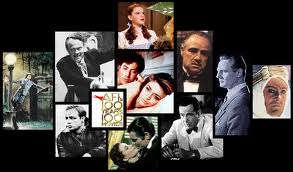
10. The Wizard of Oz
9. Vertigo
8. Schindler's List
7. Lawrence of Arabia
6. Gone with the Wind
5. Singin' in the Rain
4. Raging Bull
3. Casablanca
2. The Godfather
1. Citizen Kane

Of the ten, I've seen only two: Godfather and Oz. Fingers crossed we've got ten five star movies up there. 

Sunday, February 5, 2012

#12 The Searchers (1956)


Plot summary (with spoilers): We sweep across the gorgeous Texas landscape. It's 1868, and The Duke returns home three years late, after fighting in the Civil War. He arrives at the door of his brother and his brother's wife and family. They're thrilled and excitedly greet him and ask him to stay and eat dinner with them. The Duke accepts, speaking in that delightful mildly retarded, drunken stroke-victim way of his. The family dotes on his every whim while he shambles around and slurs some more and is irascible. He also says "that'll be the day!" at one point, all indignantly. He says that like five times in this movie. It's his catchphrase. An angry, sarcastic, "that'll be the day!" To let us know how tough he is.
Then some other dudes show up, including the finance of one of The Duke's nieces, and an old coot Reverend, who is also a Captain in the Texas Rangers army. They say that some dirty Comanche Injuns have been stealing their cattle and they're rounding up a posse to give the Injuns what for. The Duke agrees to help them, but won't join the Rangers officially because he's still a member of the Confederate Army, dammit. You can tell he's angry because his inflection and facial expressions remain exactly the same.
The menfolk go riding off. They include not only the manliest manfolk of them all, The Duke, but also The Duke's niece's fiance Bud, as well as his nephew Martin, the old coot Reverend, a bunch of other no-names, and some bald crazy weirdo named Mose. Mose is the "comic" "relief" in this movie and makes funny faces and crosses his eyes and stuff, like you would do if you were attempting to amuse a one year old.
But it was all a ploy by the Comanche. While the menfolk are out in the plains, the Injuns ride up to the family home, where The Duke's brother and wife remain, as well as their older daughter Lucy and little daughter Debbie. The family sees the Comanche riding up and lift Debbie up to the back window and they tell her to run away as fast as she can. The window's plenty big. I don't see why they can't all run. But it's all for not, as the Comanche chief sees her and approaches. Unfortunately, due to genocide, there aren't a lot of Native American actors out there, so the part of the murderous Comanche chief is played by a white man in brown make-up.
The menfolk return to find the home burned to the ground. The bodies of The Duke's brother and sister-in-law are found, but the daughters are missing. So they ride off in search of them.
The Duke wants to ride in and kill everyone, even at the cost of his niece's lives, but the Reverend wants a rescue mission. The Duke goes along with it, but don't like it. (According to wiki, the subtext is supposedly that The Duke's character was in love with his brother's wife and driven mad by her death. But since John Wayne thinks "Subtext" is the name of a fag bar in New York City, this doesn't really come across). But soon the Comanche surround them. There's a shoot-out across the river. A couple men go down. The Reverend orders a retreat. He tells the Duke there's too many of them and the Comanche can see them coming. The Duke says he'll go on alone, but Lucy's fiance Bud and her brother Martin want to go as well.
(You know how it's funny that Luke Skywalker's first line is some terribly-delivered whiny bit about wanting to go buy power converters? Well, every single one of Martin's lines is delivered in that same whiny pitch. It's fucking terrible. Between him and John Wayne, this is literally the worst acted movie in all of Hollywood history. All they need now is Sofia Coppola and it would be the perfect Holy Trinity of shit acting).
So Martin, Bud, and The Duke go off on their own and wander around a bit and finally The Duke goes into some caves and finds Lucy dead. He tells Bud, who charges the Comanche camp and is killed.
The Duke and Martin press on through the winter, and finally lose the trail. They go to Bud's family's home and give them the sad news. Bud's younger sister Laurie doesn't seem to give a shit and aggressively hits on Martin. The Jorgensens also have a letter that was sent to them by a dude Futterman, who claims to know that Lucy and Debbie were kidnapped by a Comanche chief named Scar, and that he knows where Scar is.
The Duke and Martin press on, and Martin writes Laurie letters about their progress. They find Futterman, who will only give them info for money, so The Duke gives him five gold pieces and he says "something something due west" or whatever, and they go.
After many more adventures, including a HI-larious bit of wackiness where Martin accidentally buys and marries a Comanche squaw, five years have passed.
The Duke and Martin have finally tracked Scar's location. They happen upon some other women who were kidnapped by Scar, but now they're crazy and have their hair tied up in Injun braids and wear red face paint. They grunt and squawk and rock back and forth. Then this dialog happens.

Martin: They don't even seem white!
The Duke: They ain't white. Not anymore.

And they both walk away sadly, as the formerly white human women descend further into Injun madness. Good Christ.
They sneak up to Scar's camp, and find Debbie herself, having gone fully native. Martin tries to get her to go with them, but she insists she's happy here. The Duke tries to kill her dead, but Martin shields her body and then the Comanche attack. The Duke gets an arrow in the arm, but he and Martin still escape.
In the worst acted scene in a movie filled to the brim with them, Martin screams and rants and raves at The Duke for trying to kill his sister, while The Duke counters that she ain't his sister no more because the Injuns have got to her. The scene ends with Martin's truly cringe inducing "I hate you. I wish you were dead!" in exactly the same tone and inflection as a fifteen-year old girl, and The Duke says, "that'll be the day!" and I think this is when I punched myself in the face just to feel something again.
Then the go back to the Jorgensen home, where they happen upon Laurie about to get married. Martin's incensed, and tries to fight the other dude and there's this one weird hilarious part where they're grappling in the dirt while everyone watches and the other dude goes "Whoa! Wait, wait!" and they both stop and he picks up a fiddle off the ground and says, "somebody's fiddle" and then someone quickly runs up and grabs it and then they keep fighting. So weird and random and almost worth this twenty minute digression for no reason. Then Mose runs up and says he knows where Scar is, so they stop fighting and everyone gets ready for a full-on attack.
They charge Scar's camp and kill a bunch of Injuns and a bunch of them get killed and then Debbie has a change of heart and tries to go with Martin but they get separated during the melee, The Duke sees her running down a hill and he gallops over to her and Martin thinks he's going to kill her and there's "suspense" as The Duke gets closer and closer to her and she screams and falls down and he stands over her and says..."come on, Debbie, let's go home".
So they all go home but The Duke doesn't go inside because he's all deep and broken and shit and he rides away to go make 200 movies playing the exact same character.
See ya, Duke. Don't let the swinging doors hit ya.

Review: I hate John Wayne. So very, very much. He's terrible. Really, really terrible. His movies are really terrible. When I was a kid, my stepfather watched nothing but John Wayne movies, seemingly in a 24/7 constant loop and I've probably seen them all but with no clear way of knowing where one begins and the other ends. Hey, maybe that's the secret. Maybe all his movies are actually just one giant 600 hour movie that will play in Hell throughout eternity. Also, besides John Wayne horrible acting, the guy playing Martin was actually worse and the story was boring and racist and kept digressing for no real reason.

Stars: One star out of five, because that weird fiddle line made me laugh.

Next, perhaps my last silent film ever, "City Lights", and then the Final Ten.